On this page
Our top picksWhy does my dog pull on the leash?The stop-and-reward methodHarness or collar for a dog that pulls?What about big, strong dogs?Walking in the darkCommon mistakes that keep dogs pullingHow long does it take to stop a dog pulling?FAQSourcesOur top picks
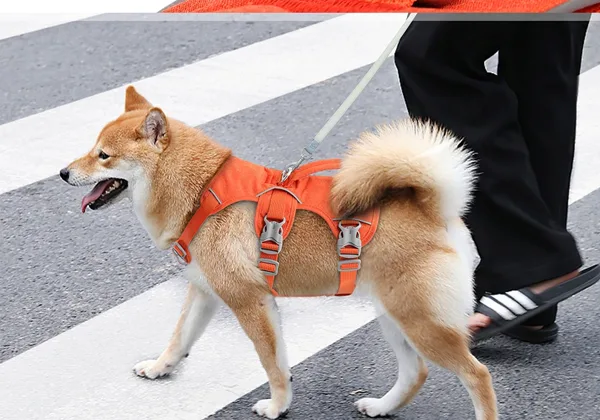 Best for: Small and medium dogs learning to walk nicely
Escape-proof front-clip harness
Front chest D-ring + back clip, 3 straps, handle; XS–M (chest ≈30–81 cm)Check price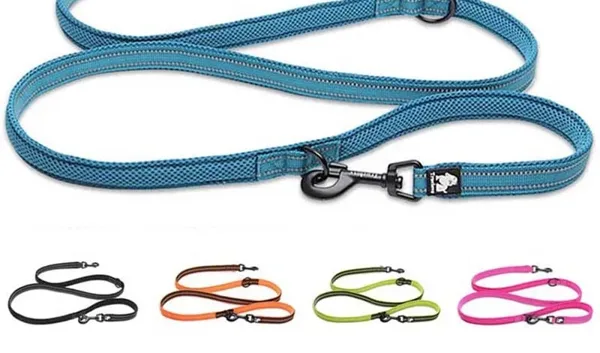 Best for: Pairing with a front-clip harness
7-in-1 multi-function dog lead
200 cm, clips at both ends, 6 setups incl. double-ended and hands-freeCheck price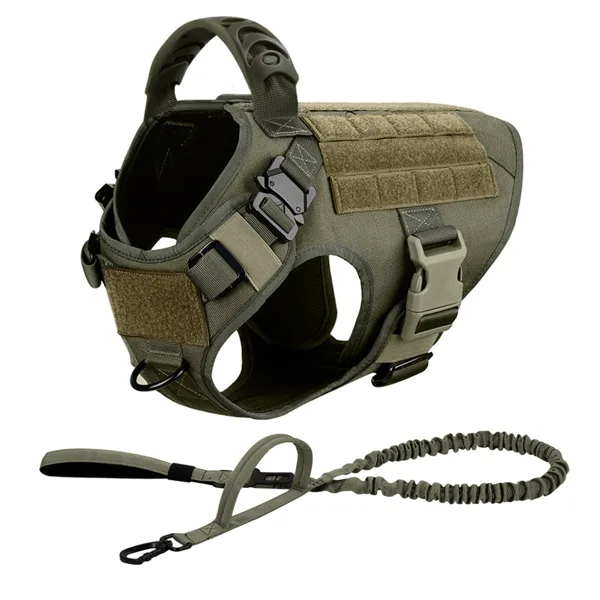 Best for: Large, strong dogs that need close control
Tactical harness and bungee lead set
Padded vest, top handle, bungee leash 100–135 cm; S–XL (chest ≈62–122 cm)Check price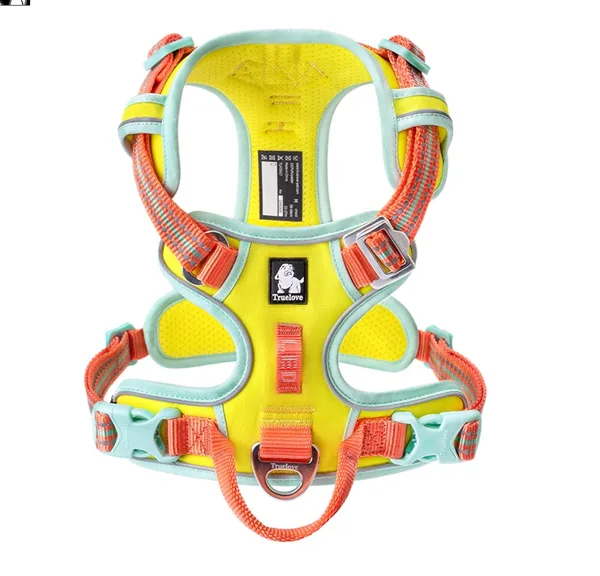 Best for: Evening walks in the dark
Padded reflective anti-pull harness
Padded Cordura, 3M reflective webbing, LED slot; XS–XL (chest ≈33–107 cm)Check priceCompare them side by side
| Photo | Product · best for | Key specs | The catch |
|---|---|---|---|
| Escape-proof front-clip harness Small and medium dogs learning to walk nicely | Front chest D-ring + back clip, 3 straps, handle; XS–M (chest ≈30–81 cm) | Only three sizes; no large-dog option |
| 7-in-1 multi-function dog lead Pairing with a front-clip harness | 200 cm, clips at both ends, 6 setups incl. double-ended and hands-free | Width S 1.5 cm to L 2.5 cm; pick by your dog's size |
| Tactical harness and bungee lead set Large, strong dogs that need close control | Padded vest, top handle, bungee leash 100–135 cm; S–XL (chest ≈62–122 cm) | Back-clip only, so it won't discourage pulling by itself |
| Padded reflective anti-pull harness Evening walks in the dark | Padded Cordura, 3M reflective webbing, LED slot; XS–XL (chest ≈33–107 cm) | 'Anti-pull' is the seller's word; the photos don't show a front ring |
Why does my dog pull on the leash?
Because pulling works: every time the leash is tight and you keep walking, your dog learns that pulling gets them where they want to go.
Dogs walk faster than we do, and everything ahead smells interesting. Add a few months of being followed whenever they lean into the leash, and pulling becomes a habit. That's why gear alone rarely fixes it. The habit has to be unlearned.
Puppies pull for the same reason, only with more energy. Starting the method below early, even before vaccinations are done and walks begin, saves months of habit later (in the UK, the same problem is usually called pulling on the lead).
The stop-and-reward method
Make a loose leash the only thing that moves you forward.
As soon as the leash goes tight, stop. Take a few steps backwards, call your dog cheerfully, and reward them with a treat as they arrive at your side. Then walk on. The AKC suggests rewarding every 3 or 4 steps while your dog stays beside you at first, then spreading the rewards out.
Pick a cue such as "with me" or "let's go" and use it every time. Consistency matters more than anything: if your dog is allowed to pull on some walks, it only confuses them.
Start somewhere boring. Practise in the house, then the garden, then a quiet street, as the RSPCA advises, before trying it near other dogs.
Harness or collar for a dog that pulls?
A harness. When a dog pulls on a collar, the force goes into the neck and throat; a harness spreads it across the chest and shoulders.
For training, a front-clip harness helps most: the leash attaches at the chest, so pulling swings your dog round to face you rather than letting them lean forward. RSPCA Queensland recommends a front-attaching harness with a double-ended leash for loose-leash training.
Avoid check chains, choke and prong collars. The RSPCA says these cause pain and can damage the neck. The AKC also advises against retractable leashes, which reward pulling with more length.
Escape-proof front-clip harness
The front chest ring is the reason it's here: when your dog pulls, a front clip turns them back towards you instead of letting them lean into the harness. The third belly strap also makes it harder to back out of, which matters for dogs that twist when they pull.
7-in-1 multi-function dog lead
Clip one end to the front ring and the other to the back ring, and you can steer gently from the front without pulling on the neck. The other setups (a shorter 110 cm traffic leash, hands-free round the waist) are useful once the pulling is under control.
What about big, strong dogs?
Safety first: a padded harness with a solid top handle lets you hold a large dog close while the training catches up.
Measure the chest at its widest point, behind the front legs. The tactical harness runs from about 62 cm (S) to 122 cm (XL) around the chest, and the seller advises choosing the smaller size if your dog falls between two.
Tactical harness and bungee lead set
For a large dog that can pull you off balance, the top handle lets you hold them close past other dogs or traffic. It's a control tool, not a training fix: pair it with the stop-and-reward method below.
Walking in the dark
Winter means more walks after sunset, so reflective gear matters more than usual.
All four products here have reflective strips. The padded harness adds a slot for a small LED light, which helps drivers see your dog from further away.
Padded reflective anti-pull harness
A comfortable, well-padded harness with the widest size range here, plus reflective webbing and a slot for a small light for winter walks. Don't expect it to stop pulling on its own.
Common mistakes that keep dogs pulling
Most setbacks come from mixed signals: the dog sometimes gets to pull, so pulling keeps paying off.
Walking on while the leash is tight, even for a few steps to cross the road, teaches your dog that pulling still works. If you're in a hurry, use the harness handle or a short leash and treat it as a 'non-training' walk rather than letting the rules slip.
Yanking back on the leash is another one. It hurts, it can damage the neck on a collar, and it doesn't show your dog what you want. Stand still, wait for slack, reward. Boring for you, clear for them.
Long walks too soon are the third. A dog that's had no exercise all day will struggle to concentrate. Let them burn some energy first (a game in the garden, a sniff session), then practise.
How long does it take to stop a dog pulling?
Expect a few weeks of short, consistent sessions before a loose leash becomes normal on everyday walks.
Five to ten minutes of focused practice beats one long frustrating walk. Some days will go backwards, especially in new places. Shorten the session, go back to an easier spot, and end on a good few steps.
Frequently asked questions
Is pulling on the leash bad for dogs?
It can be. When a dog pulls against a collar, the pressure goes into the neck and throat, which the RSPCA warns can cause pain and injury, especially in dogs with short faces or long necks. A harness spreads that force across the chest and shoulders.
Do no-pull harnesses actually work?
A front-clip harness makes pulling less effective and easier to manage, but it doesn't teach your dog anything by itself. Combine it with the stop-and-reward method and it speeds the training up.
Is a retractable leash OK for a dog that pulls?
Not while you're training. The AKC advises against them: the leash pays out more length when your dog pulls, which rewards the pulling.
How should a harness fit?
Snug enough that your dog can't back out of it, with room to slide two fingers under the straps. Check the fit again after a few weeks, and more often with a growing puppy.
What length of leash is best for training?
A standard leash of about 1.8 m (6 ft) is easiest to manage. The 7-in-1 lead here is 200 cm and can be shortened to 135 cm or 110 cm.
Sources
- Leash training: how to train a dog or puppy to walk on a leash, American Kennel Club: Stop and step back when the dog pulls, reward at your side every 3-4 steps, be consistent, avoid retractable leads, front-clip harness for large puppies.
- How to stop your dog pulling the lead, RSPCA Queensland: Recommends a front-attaching harness with a double-ended lead for loose-lead training.
- What equipment should I use when teaching my dog or puppy to walk on a leash?, RSPCA Australia: Harnesses protect the neck; check chains, choke and prong collars cause pain and can damage the neck.
How we picked these
We read each product's full listing, size charts and spec images, chose products with strong recent sales and seller ratings, and wrote down the catch for each. We haven't tested them ourselves. Our research method.