On this page
Our top picksWhat is the safest way to secure a dog in the car?How to secure a dog in the car with a seat beltHow to secure a small dog in the carHow to secure a dog in the car boot or SUV cargo areaHow to protect the car interior from your dogHow to get a dog used to the car before a long tripFAQSourcesOur top picks
 Best for: Any dog with a good harness
Seat belt harness clip
Aluminum alloy clip; slides onto the car's seat belt webbing and hooks to the harness D-ring; no strap to adjustCheck price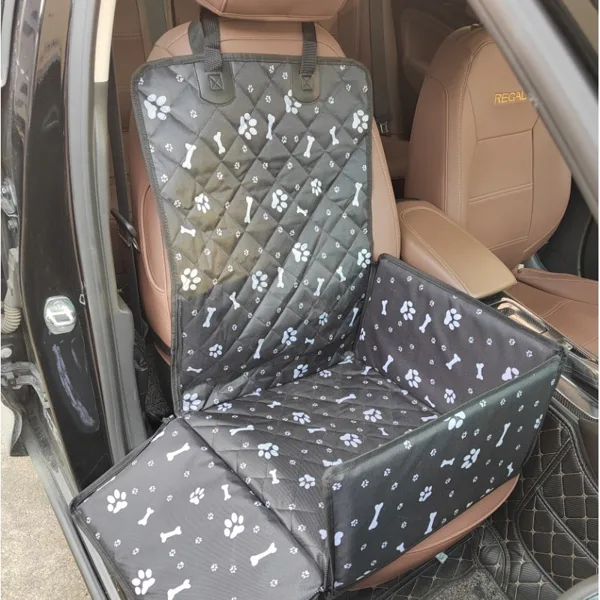 Best for: Small dogs who like to see out
Small dog car seat carrier
Padded box, 43 × 43 cm base, 25 cm sides; straps around the headrest; unfolds flat to 127 cm as a seat cover; waterproof fabric (seller)Check price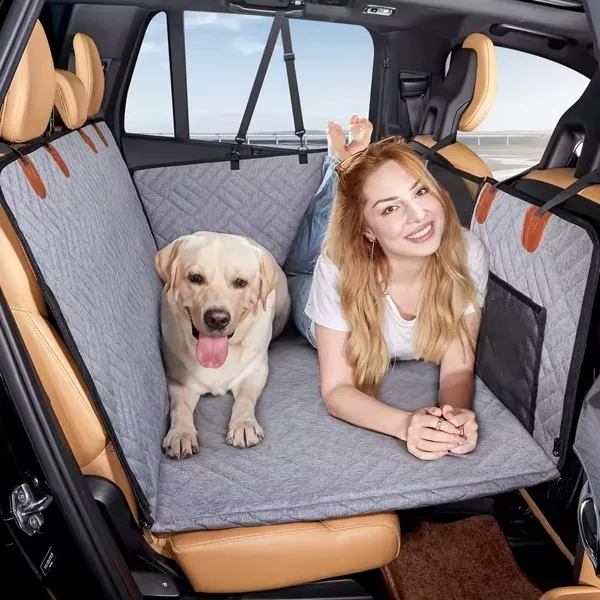 Best for: Large dogs on long trips
Back seat dog hammock with platform
Back seat cover with a firm base over the footwell; 132 cm wide, 160 cm with side flaps; mesh window; seller rates it at 270 lbCheck price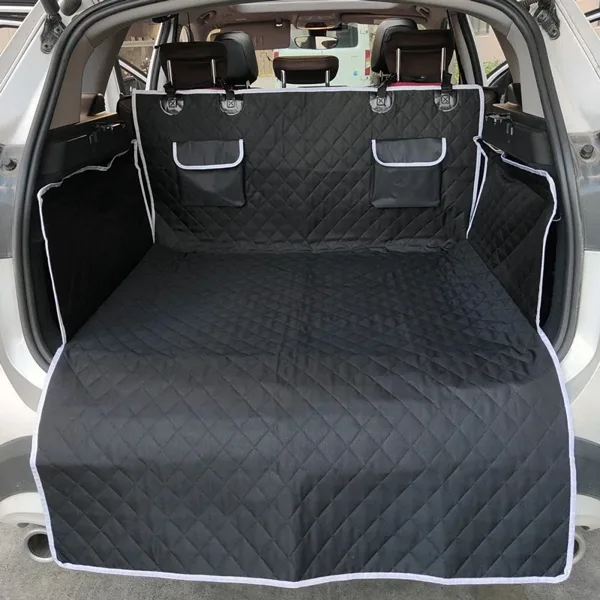 Best for: Dogs who ride in an SUV boot
SUV trunk liner with side walls
Quilted waterproof liner, 104 × 180 cm floor, 33 cm side walls, bumper flap, leash pocketCheck priceCompare them side by side
| Photo | Product · best for | Key specs | The catch |
|---|---|---|---|
| Seat belt harness clip Any dog with a good harness | Aluminum alloy clip; slides onto the car's seat belt webbing and hooks to the harness D-ring; no strap to adjust | The seller says collar or harness; use it with a harness only. Not crash-tested |
| Small dog car seat carrier Small dogs who like to see out | Padded box, 43 × 43 cm base, 25 cm sides; straps around the headrest; unfolds flat to 127 cm as a seat cover; waterproof fabric (seller) | No weight limit in the listing; best for small dogs. Not crash-tested |
| Back seat dog hammock with platform Large dogs on long trips | Back seat cover with a firm base over the footwell; 132 cm wide, 160 cm with side flaps; mesh window; seller rates it at 270 lb | It keeps a dog off the footwell floor but doesn't hold them in place; clip their harness to a belt too |
| SUV trunk liner with side walls Dogs who ride in an SUV boot | Quilted waterproof liner, 104 × 180 cm floor, 33 cm side walls, bumper flap, leash pocket | A liner protects the car, not the dog. Use it under a strapped-down crate or behind a dog guard |
What is the safest way to secure a dog in the car?
A well-ventilated crate, strapped down so it can't slide, is the safest option according to the ASPCA.
The ASPCA's road trip advice puts a crate first. It should be big enough for your dog to stand, sit, lie down and turn around, and it has to be secured so it won't shift if you stop suddenly. A loose crate in the boot only moves the problem.
If a crate doesn't fit your car or your dog, the ASPCA's fallback is the back seat, in a harness attached to a secured seat belt. The UK Highway Code (Rule 57) gives drivers the same set of choices: a seat belt harness, a pet carrier, a dog cage or a dog guard. Its reason is practical too: a loose dog can distract you, or injure you or themselves if you stop quickly.
How to secure a dog in the car with a seat belt
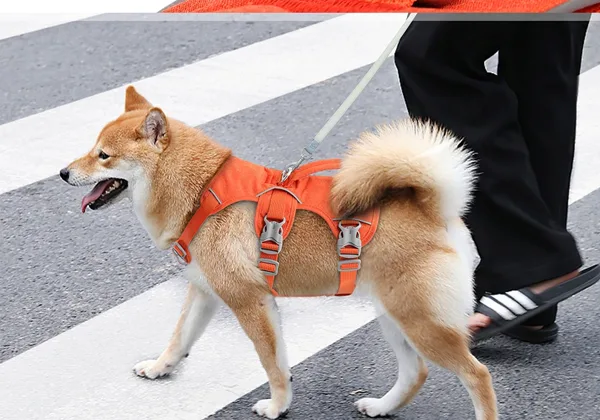
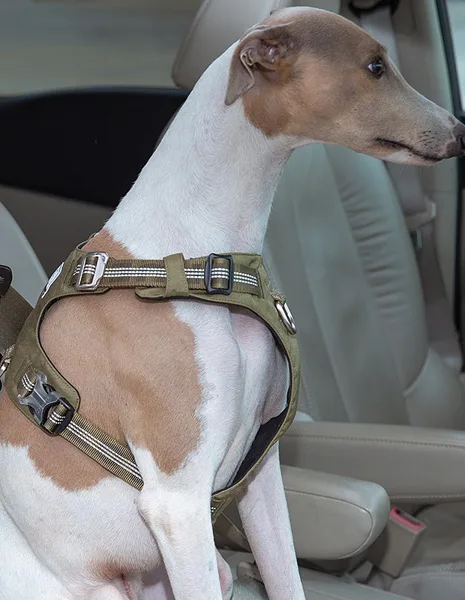
Put your dog in a harness, buckle the seat belt, and clip the harness to the belt with a short clip or tether.
The clip here slides onto the belt webbing and hooks straight to the D-ring on the back of the harness. There's no long strap, so your dog can sit or lie down but can't climb into the front or slide off the seat.
Always clip to a harness, never to a collar. The ASPCA's advice is specifically a harness attached to a seat belt. A collar puts any sudden pull on the neck.
Seat belt harness clip
This follows the ASPCA's no-crate advice directly: the belt stays buckled, and your dog's harness clips onto it in the back seat. Because there is no long strap, your dog can sit or lie down but can't wander into the front.
How to secure a small dog in the car
Use a booster-style carrier in the back seat and clip the inside tether to your dog's harness.
Small dogs slide across a bare seat on every turn. A carrier like this one gives them a 43 × 43 cm base with 25 cm padded sides, strapped around the headrest so the box itself stays put. Many small dogs also settle better when they can see out of the window.
Keep it in the back. The ASPCA says to always keep a dog in the back seat when they're not in a crate. The listing doesn't give a weight limit, so it's best for toy and small breeds; a dog whose head and shoulders hang over the sides needs a crate or a seat belt clip instead.
Small dog car seat carrier
A small dog on a bare seat slides around every corner, and this gives them four padded sides and a raised spot to watch from. Clip the inner tether to their harness, not their collar, and put it in the back seat.
How to secure a dog in the car boot or SUV cargo area
Use a crate strapped to the boot's tie-down points, or a dog guard between the boot and the back seats.
Most of the searches for this topic ask about the boot, and the answer is the same as for the back seat: the dog needs to be contained. The Highway Code names a dog cage or a dog guard for this. A guard stops your dog jumping into the back seats but leaves them free to slide around the boot, so a strapped-down crate is the better option for long drives.
The trunk liner here is for underneath. It covers a 104 × 180 cm floor with 33 cm walls up the sides, so mud, hair and the odd accident stay off the carpet. It isn't a restraint, and nothing about it stops a dog moving in a sudden stop.
SUV trunk liner with side walls
The boot is where a crate fits best in most SUVs, and this liner keeps mud and hair off the carpet and side panels underneath it. On its own it isn't a restraint, so pair it with a crate or a guard between the boot and the back seats.
How to protect the car interior from your dog
A waterproof back seat hammock catches hair and mud and, if it has a firm base, stops big dogs dropping into the footwell.
Standard hammocks are fabric slung between the front and rear headrests. The one here has a firm base over the footwell, which the seller rates at 270 lb, so a large dog has one flat surface 132 cm wide instead of a gap to slip into when you brake.
It still doesn't hold your dog in place. Use the harness slots and a seat belt clip with it, so the hammock handles the mess and the clip handles the safety.
Back seat dog hammock with platform
Big dogs often fall into the footwell when the car brakes hard. This turns the back seat into one flat platform that bridges that gap, and the photos show harness slots so you can still use a seat belt clip.
How to get a dog used to the car before a long trip
Start with short drives and make them gradually longer, as the ASPCA recommends.
A dog whose only car rides end at the vet will expect the worst. Try a few five-minute drives that end somewhere good, like a walk, before a holiday road trip. Put the carrier, harness or crate in place for those short drives too, so the setup is familiar by the time the long one comes.
On the trip itself, don't let your dog ride with their head out of the window, and never leave them alone in a parked car. The ASPCA warns that a parked car turns into an oven in hot weather and holds in the cold in winter.
Frequently asked questions
Is it illegal to have a dog loose in the car?
In the UK, Rule 57 of the Highway Code tells drivers to make sure dogs are suitably restrained, and a loose dog that distracts you can count against you. In the US the rules vary by state. Either way, the safety case is the same: a loose dog can be hurt, or hurt you, in a sudden stop.
Can a dog ride in the front seat?
The ASPCA says to keep dogs in the back seat in a harness attached to a seat belt if they aren't in a crate. Put the booster carrier in the back too, even though it fits a front seat.
Are these car seats and clips crash-tested?
No. None of the products in this guide list a crash test. The Center for Pet Safety runs independent crash tests and publishes a list of certified harnesses, crates and carriers, if you want that level of protection for frequent trips.
Should I clip the seat belt to my dog's collar?
No. Clip it to a harness. With a collar, the whole jolt goes through the neck, and the ASPCA's advice is specifically a harness attached to a secured seat belt.
Sources
- Travel Safety Tips, ASPCA: A well-ventilated, secured crate is the safest option in a car; without one, keep the pet in the back seat in a harness attached to a secured seat belt; no head out of the window; short practice drives first; never leave a pet alone in a parked car.
- The Highway Code: Rules about animals (47 to 58), GOV.UK: Rule 57: make sure dogs are suitably restrained so they can't distract the driver or be injured in a quick stop; a seat belt harness, pet carrier, dog cage or dog guard are ways to do it.
- Center for Pet Safety, Center for Pet Safety: Independent crash testing of pet travel products and a list of certified harnesses, crates and carriers.
How we picked these
We read each product's full listing, size charts and spec images, chose products with strong recent sales and seller ratings, and wrote down the catch for each. We haven't tested them ourselves. Our research method.